Why a Cooking Class Is the Best Souvenir You'll Bring Home
You can buy a leather bag in the souk that will wear out in two years. You can take a thousand photos that will sit in your phone's camera roll forever. But learn to make a proper Moroccan tagine — the kind where the onions caramelize into a dark, sweet jam and the preserved lemons dissolve into the sauce — and you have something you'll recreate in your own kitchen for the rest of your life. A cooking class in Morocco is not just a tourist activity. It is a doorway into the culture, the family structure, the agricultural rhythms, and the centuries of trade that shaped one of the world's great cuisines.
Agadir and Taghazout have become excellent bases for Moroccan cooking experiences, with several classes that range from casual three-hour sessions to full-day market-to-table journeys. Here's everything you need to know to choose the right one.
Understanding Moroccan Cuisine Before You Cook
Before you tie on an apron, it helps to understand what makes Moroccan food different from other North African and Middle Eastern cuisines. For a deep dive, read our complete guide to Moroccan food and culinary traditions. Here's the quick version:
- Spice blends over single spices: Moroccan cooking relies on complex blends — especially ras el hanout (literally "head of the shop"), which can contain 20–40 spices including cardamom, nutmeg, turmeric, cinnamon, black pepper, rose petals, and sometimes lavender. Every spice merchant has their own recipe, and the blend varies by region.
- Sweet meets savory: Cinnamon with lamb, powdered sugar on pigeon pie (pastilla), caramelized onions with dried fruit in tagines — the interplay of sweet and savory is a hallmark of Moroccan cooking inherited from Andalusian culinary traditions.
- Slow cooking: Tagines (the conical clay pots) are designed for low, slow heat that tenderizes tough cuts of meat and concentrates flavors over 2–3 hours. The cone traps steam and returns it to the dish, creating an incredibly moist result without adding extra liquid.
- Bread as utensil: Moroccans eat with their hands using khobz (round flatbread) to scoop food. Bread is sacred — never place it upside down, never throw it away, and always tear it with your right hand.
- Preserved ingredients: Preserved lemons (aged in salt and lemon juice for 30+ days), dried fruits, and fermented butter (smen) add depth that fresh ingredients alone cannot achieve.
The Best Cooking Classes in the Agadir Area
1. Moroccan Cooking Class in Agadir (Half-Day)
The Moroccan cooking class in Agadir is the most popular option for visitors staying in the city. A typical session runs 3–4 hours and follows this format:
- Welcome tea and introduction (30 min): You arrive at a traditional cooking school or riad kitchen, meet your instructor (usually a local woman who learned from her mother and grandmother), and discuss the menu over mint tea and Moroccan pastries.
- Preparation (60–90 min): Hands-on work — peeling, chopping, grinding spices, preparing preserved lemon paste, mixing the chermoula marinade, and assembling the tagine. The instructor explains each ingredient, its origin, and why it matters.
- Cooking (60–90 min): While the tagine simmers, you prepare side dishes: Moroccan salads (zaalouk, taktouka, carrot-orange salad), fresh bread, and dessert (often a simple orange-cinnamon plate or almond-stuffed pastries).
- Eating (30–45 min): You eat everything you've made. This is the best part — sitting around a communal table with fellow students, tearing bread, and eating food you've cooked yourself in a Moroccan kitchen.
Price: Approximately 350–500 MAD (€32–46) per person. Group sizes range from 2–10 students. Private sessions available at a premium.
2. Taghazout Tagine Cooking Class
The Moroccan cooking class in Taghazout focuses specifically on tagine preparation — which makes sense, since the tagine is arguably the single most important dish in Moroccan cuisine. Held in a village home or cooking studio in Taghazout, this class offers a more intimate, less commercialized experience than city-based options.
What you'll learn:
- Chicken tagine with preserved lemons and olives: The most classic of all Moroccan tagines. The technique of layering flavors — marinating the chicken in chermoula, browning the onions separately, creating the sauce, then combining everything — is the foundation of all tagine cooking.
- Vegetable tagine with seasonal produce: A vegan option that's equally satisfying when done right. Potatoes, carrots, zucchini, tomatoes, chickpeas, and whatever is fresh at the market, seasoned with cumin, paprika, turmeric, and a handful of fresh cilantro.
- Proper tagine technique: How to manage the heat (tagines crack if heated too fast), when to add liquid, how to check seasoning without lifting the lid too often, and how to serve directly from the pot at the table.
Price: Approximately 300–450 MAD per person. Smaller groups (2–6), more personal attention.
3. Market-to-Table: Cooking Class with Souk Visit
For the full experience, the Moroccan cooking class with market tour starts at a local souk where your instructor guides you through the stalls, explaining how to choose ingredients:
- Spices: How to tell fresh cumin from stale (rub between fingers — fresh cumin releases strong aroma immediately), why whole spices are always better than pre-ground, and which spice combinations work for which dishes.
- Meat: How Moroccan butchers cut differently (lamb shoulder for tagine, not leg — shoulder has more collagen for slow cooking). What "beldi" (free-range) chicken looks like versus factory-farmed.
- Vegetables: Seasonal produce only. In winter: pumpkin, turnips, fava beans. Spring: artichokes, peas, tomatoes. Summer: peppers, eggplant, zucchini. This seasonal approach is fundamental to Moroccan cooking — recipes change with the calendar.
- Olives and preserved lemons: How to taste and select from dozens of varieties. The difference between green and red olives, cracked and whole, spiced and plain.
After the market, you return to the kitchen to cook a full three-course meal using the ingredients you've selected.
Duration: 5–6 hours total (1.5–2 hours at the market, 3–4 hours cooking and eating). Price: 450–650 MAD per person, including all ingredients.
Dishes You'll Learn to Cook
While menus vary by class and season, here are the dishes most commonly taught:
Tagine (Multiple Variations)
Chicken with preserved lemons and olives — the classic. Lamb with prunes and almonds — a festive dish with cinnamon-sugar sweetness. Kefta (meatball) tagine with eggs — spiced beef or lamb meatballs poached in a cumin-tomato sauce with eggs cracked on top, like a Moroccan shakshuka. Fish tagine — common in Agadir, using fresh catch from the port, with chermoula, bell peppers, and potatoes.
Couscous
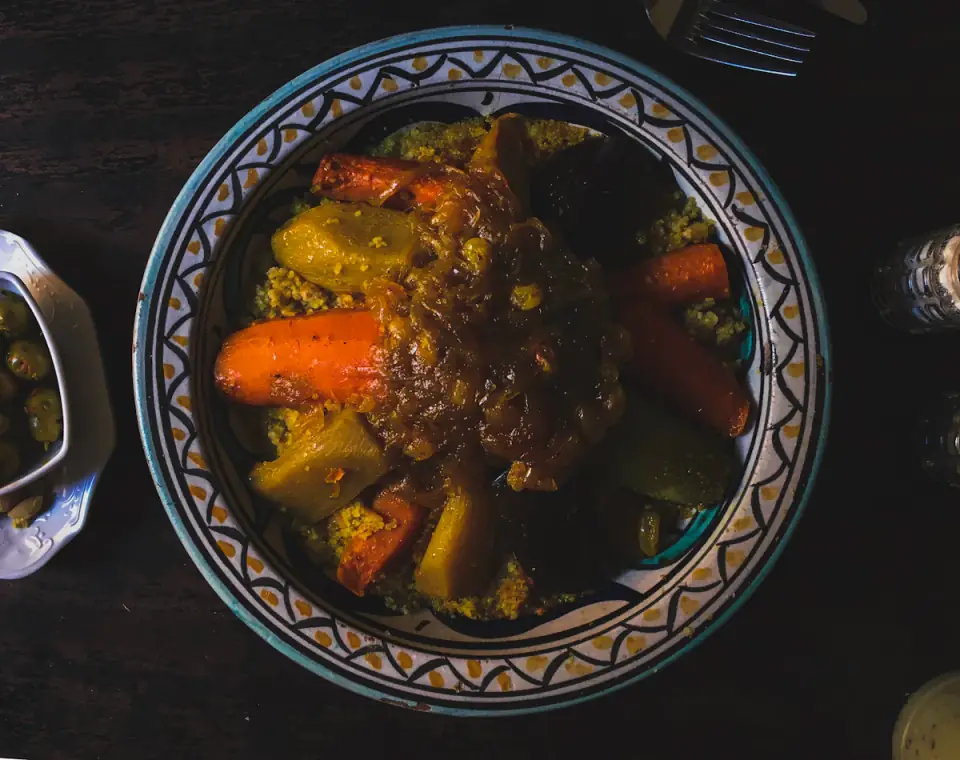
Friday couscous is a sacred tradition in Morocco — families gather after midday prayer for a mountain of hand-rolled semolina steamed over a vegetable-and-meat broth. Learning to properly steam couscous (three steamings in a couscoussier, fluffing with butter and olive oil between each) is a skill that takes patience but transforms store-bought couscous from a bland side dish into something silky and spectacular.
Moroccan Salads
Zaalouk: Smoky eggplant and tomato dip with garlic, cumin, and paprika — Morocco's answer to baba ghanoush. Taktouka: Roasted pepper and tomato salad with a punch of garlic and olive oil. Carrot salad: Cooked carrots with cumin, harissa, and lemon juice. These salads are served at the beginning of every Moroccan meal as a spread across the table.
Bread
Khobz: Round semolina bread baked on a griddle or in a wood-fired oven. Msemen: Square, flaky layered pancakes, crispy on the outside and soft inside. Baghrir: "Thousand-hole" crepes — spongy pancakes covered in tiny bubbles, served with melted butter and honey.
Beyond the Kitchen: Food Experiences in Agadir
If you want to experience Moroccan food without cooking it yourself, the Agadir authentic food tour takes you through the streets and stalls where locals actually eat — far from the tourist restaurants on the corniche. You'll try dishes you'd never find on your own: bissara (split pea soup eaten for breakfast), sardine kefta from the port, sfenj (Moroccan doughnuts) fresh from the fryer, and makouda (spiced potato fritters) from a street cart.
For ingredient shopping after your class, the Souk El Had guided tour helps you navigate Agadir's massive traditional market, where you can stock up on spices, argan oil, and preserved lemons to bring home.
And if you're extending your trip along the coast, the Essaouira full-day trip is a must for seafood lovers — Essaouira's port is one of Morocco's most active fishing harbors, and the grilled fish stalls at the harbor are legendary.
Tips for Getting the Most from Your Cooking Class
- Ask questions relentlessly: The instructor's knowledge goes far beyond the recipe. Ask about substitutions, variations for different seasons, family traditions, and where to source ingredients at home.
- Take notes and photos: Most classes provide a recipe card, but take your own photos of each step. A photo of "this is how brown the onions should be" is worth more than any written instruction.
- Wear comfortable clothes: Kitchens are warm, and tagine splatter is real. Don't wear your best white shirt.
- Dietary needs: Vegetarian and vegan tagines are easily arranged — just inform the organizer at booking. Gluten-free guests should note that bread and couscous are central to most menus, but instructors can adjust.
- Bring spices home: Buy ras el hanout, cumin, saffron threads, and dried rosebuds from the souk before you leave. Vacuum-sealed bags pass through customs without issue. The spices here are a fraction of the price you'd pay in Europe or North America — a 100g bag of saffron that costs €30 in Paris is about 40–60 MAD (€4–5) in Agadir's souk.
- Book early in your trip: Take the class in the first days of your holiday so you can practice identifying ingredients and techniques during the rest of your stay.
Who Are These Classes For?
Everyone. Seriously. You do not need cooking experience — the classes are designed for beginners. Couples find them romantic (cooking together, eating by candlelight). Families with children find them educational and fun (kids love kneading bread). Solo travelers meet new people. Food professionals pick up techniques they've never seen. Groups of friends turn them into the highlight of their trip.
Final Thoughts
Moroccan food is generous, aromatic, and deeply tied to family and community. A cooking class doesn't just teach you recipes — it gives you a window into daily life, into the way Moroccan families gather, share, and celebrate through food. Whether you choose a half-day session in Agadir, a tagine-focused class in Taghazout, or the full market-to-table experience, you'll leave with skills, stories, and flavors that no restaurant meal can match.