Beyond the Beach: Agadir's Secret Hinterland
Most visitors to Agadir spend their holiday within a comfortable radius of the beach, the corniche, and the hotel pool. And there's nothing wrong with that — the sunshine and seafood alone justify the trip. But within a one-to-three-hour drive of the city lies a constellation of places that most tourists never see: a waterfall hidden in the High Atlas foothills, a beach with natural stone arches carved by millions of years of Atlantic erosion, and a walled city so perfectly preserved that it makes Marrakech look modern. These are the hidden gems near Agadir, and they will fundamentally change how you think about southern Morocco.
For a broader overview of excursions from the city, check our guide to the best day trips from Agadir in 2026. This article goes deeper into three specific destinations that reward the curious traveler willing to leave the coast behind for a day.
Imouzzer Ida Outanane: The Paradise Waterfall
What Makes Imouzzer Special
Tucked into the foothills of the western High Atlas, about 60 kilometers northeast of Agadir, the village of Imouzzer Ida Outanane sits at an altitude of 1,200 meters in a landscape that feels more like southern Spain than North Africa. The air is cooler, the vegetation is lush, and the centerpiece — a multi-tiered waterfall cascading into honey-colored travertine pools — is one of the most photogenic natural sites in the Souss-Massa region.
The Imouzzer waterfall and High Atlas day trip from Agadir is the easiest way to visit. The drive takes about 90 minutes each way and follows a winding mountain road through argan forests, Berber villages, and terraced almond orchards that bloom white and pink in February.
The Waterfall and Pools
The main waterfall (Cascade d'Imouzzer) drops approximately 40 meters in several stages. The flow varies dramatically by season:
- Winter and Spring (November–May): The waterfall is at its most powerful, fed by mountain rains and snowmelt from the higher Atlas peaks. The pools fill to swimming depth, and the surrounding valley is brilliantly green. This is the best time to visit.
- Summer and Autumn (June–October): Flow diminishes significantly and may reduce to a trickle by September. The pools are still scenic but not always deep enough for swimming. The travertine formations remain impressive regardless.
A short hike (20–30 minutes) from the parking area leads to viewpoints above the falls and down to the pools below. The trail is rocky but manageable in sneakers. Bring water shoes if you plan to wade in the pools — the rocks are slippery.
The Honey Trail
Imouzzer is famous for its honey. The region's thyme, wildflower, and euphorbia honeys are considered among the finest in Morocco. Every June, the village hosts the Honey Festival (Moussem du Miel) with tastings, demonstrations, and competitions. Even outside the festival, roadside stalls along the approach road sell raw honey in glass jars — 50–80 MAD for a 500ml jar of thyme honey is typical. Taste before you buy; the flavor profiles vary enormously from stall to stall.
Practical Details
- Distance from Agadir: 60 km (90 minutes by car)
- Best season: February–May (waterfall at full flow, almond blossoms in February)
- What to bring: Warm layer (it's 5–10°C cooler than the coast), camera, water shoes, cash for honey purchases
- Combine with: Paradise Valley is on the same road — many tours combine both destinations in a single day
Legzira Beach: Nature's Stone Cathedral
Why Legzira Is Unforgettable
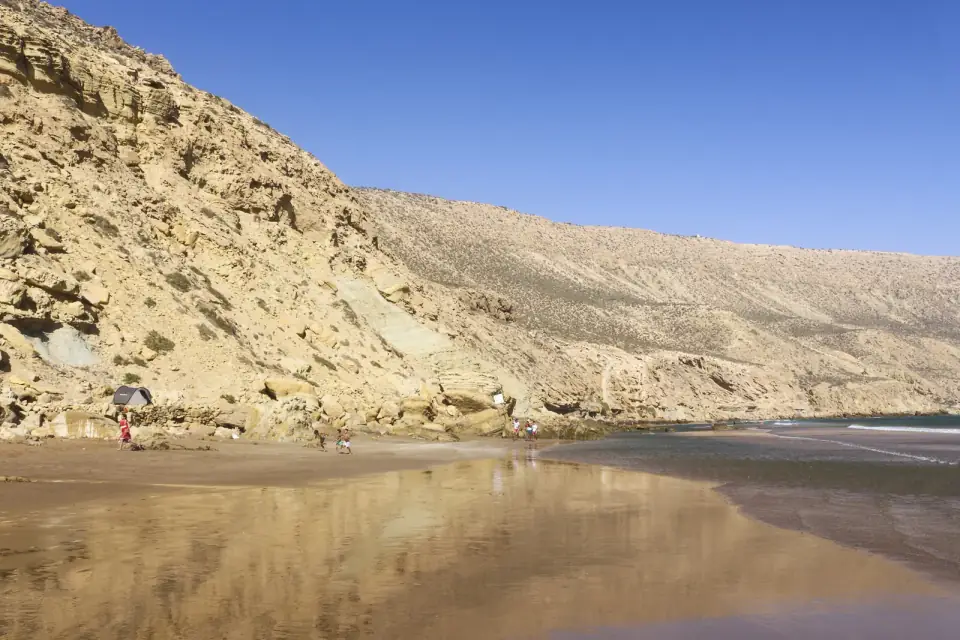
Legzira Beach, located about 150 kilometers south of Agadir near the town of Sidi Ifni, was once home to two massive natural stone arches — towering red sandstone formations sculpted by the Atlantic over millennia. One arch collapsed in 2016 (a reminder of how fragile these formations are), but the remaining arch is still one of the most spectacular geological features on Morocco's entire coastline. Standing beneath it at low tide, with the amber light of late afternoon filtering through the stone, is a genuinely humbling experience.
The Legzira Beach and Tiznit day trip from Agadir combines the beach visit with a stop in Tiznit, a silver-working town known for its jewelry artisans and intact medina walls. If you're based in Taghazout, the Legzira and Tiznit trip from Taghazout offers the same itinerary with pickup from the village.
The Beach Experience
Legzira is not a swimming beach in the traditional sense — the Atlantic here is wild, the currents are strong, and there are no lifeguards. It is a walking, photographing, and contemplating beach. Here's how to make the most of it:
- Timing is everything: Visit at low tide. The arch is accessible only when the water retreats, and the exposed rock formations, tidal pools, and sea-carved caves are revealed. Check tide times before you go — your tour operator will plan around this.
- The walk: From the cliff-top parking area, a steep staircase (or a winding path, depending on which access point you use) descends to the beach. Turn right and walk about 15 minutes along the sand to reach the arch. The cliffs on either side glow red, orange, and ochre depending on the light.
- Photography: Late afternoon (3:00–5:00 PM) is golden hour on this west-facing beach. The arch frames the ocean, and the warm light on red sandstone is extraordinary. Bring a wide-angle lens if you have one.
- Facilities: A few small cafes at the top of the cliff serve tea, coffee, and simple meals. No changing rooms or showers at the beach itself.
Tiznit: The Silver City
Most Legzira day trips include a stop in Tiznit, 45 minutes north. This small walled city is Morocco's center of silver jewelry craftsmanship — a tradition that dates back centuries to the region's Jewish and Amazigh artisans. The medina is compact and easy to navigate (unlike Marrakech or Fez), with a main souk street where dozens of jewelers display Berber fibulas, Tuareg crosses, bracelets, and rings.
Silver shopping tips:
- Sterling silver (925) is stamped. If there's no stamp, it's likely silver-plated or nickel silver — still beautiful but worth less.
- Prices start around 80–150 MAD for simple rings and bracelets, 300–800 MAD for elaborate Berber fibulas, and 500+ MAD for large statement necklaces.
- Bargain respectfully. The artisans here are craftspeople, not market hawkers.
Practical Details
- Distance from Agadir: 150 km (2–2.5 hours by car)
- Best season: Year-round, but spring and autumn offer the best combination of weather and light
- What to bring: Comfortable walking shoes (beach sand and cliff stairs), sun protection, cash for silver shopping in Tiznit
- Duration: Full day (typically 8:00 AM – 6:00 PM)
Taroudant: The Grandmother of Marrakech
A Walled City Frozen in Time
If Marrakech is the Red City, Taroudant is its quieter, older, more authentic grandmother. Surrounded by six kilometers of perfectly intact 16th-century ramparts made from sun-dried clay and lime (pisé), Taroudant was once the capital of the Saadian dynasty before they moved to Marrakech. Today, it's a living, working Moroccan city — not a tourist attraction — where life inside the walls continues much as it has for centuries.
The Taroudant and Tiout day trip from Agadir is one of the most culturally rewarding excursions in the region. From Taghazout, the Taroudant and Tiout oasis trip offers the same experience with village pickup.
What to See in Taroudant
The Ramparts: The city walls are the main attraction. They stretch unbroken around the entire old city, with five gates (babs) and dozens of towers. The best way to appreciate them is to take a calèche (horse-drawn carriage) ride around the outside — a 30–40 minute loop that costs 100–150 MAD and provides panoramic views of the walls against the backdrop of the High Atlas mountains to the north and the Anti-Atlas to the south.
Souk Arab and Souk Amazigh: Taroudant has two distinct souks. Souk Arab (also called the Grand Souk) sells household goods, clothing, vegetables, and spices. Souk Amazigh (the Berber Souk) specializes in traditional crafts — particularly stone and marble carvings, leather goods, and Amazigh jewelry. Both are remarkably tourist-free compared to Marrakech, which means prices are lower and the experience is more genuine.
Tanneries: Taroudant has small-scale leather tanneries that use traditional methods — vats of natural dyes (pomegranate, saffron, mint, indigo) where hides are soaked, stretched, and dyed by hand. Unlike the heavily touristed tanneries of Fez, these are working operations where a few dirhams and a polite request can get you access.
Tiout Oasis: A Palm Grove Picnic
Most Taroudant day trips include a visit to Tiout, a lush palm oasis about 35 kilometers southeast of the city. The oasis is fed by a mountain spring and contains thousands of date palms, olive trees, and orange groves — a vivid green island in an otherwise arid landscape.
Activities at Tiout include:
- Donkey ride through the palm grove: A gentle, scenic ride along irrigation channels and under date palms. About 30 minutes, suitable for all ages.
- Traditional lunch: Many tours include a tagine lunch prepared in a local home or cooperative restaurant at the edge of the oasis. The food is simple, fresh, and excellent.
- Historical note: Tiout is where a scene from the 1959 film Ali Baba and the Forty Thieves starring Fernandel was filmed. A plaque at the oasis commemorates the filming.
Practical Details
- Distance from Agadir: 80 km (1.5 hours by car)
- Best season: October–May (summer is extremely hot inland — 40°C+)
- What to bring: Cash for souk shopping and calèche ride, comfortable shoes for souk walking, hat and sunscreen
- Duration: Full day (typically 8:30 AM – 5:00 PM)
Other Hidden Gems Worth Mentioning
While Imouzzer, Legzira, and Taroudant are the three standout hidden gems near Agadir, several other destinations deserve a quick mention:
- Paradise Valley: A palm-lined gorge with natural swimming pools between Agadir and Taghazout. The Paradise Valley day trip includes lunch and is an easy half-day excursion.
- Souss-Massa National Park: A coastal wetland reserve south of Agadir that's home to the endangered northern bald ibis, flamingos, and wild boar. The Souss-Massa safari from Taghazout is a fantastic option for nature and birdwatching enthusiasts.
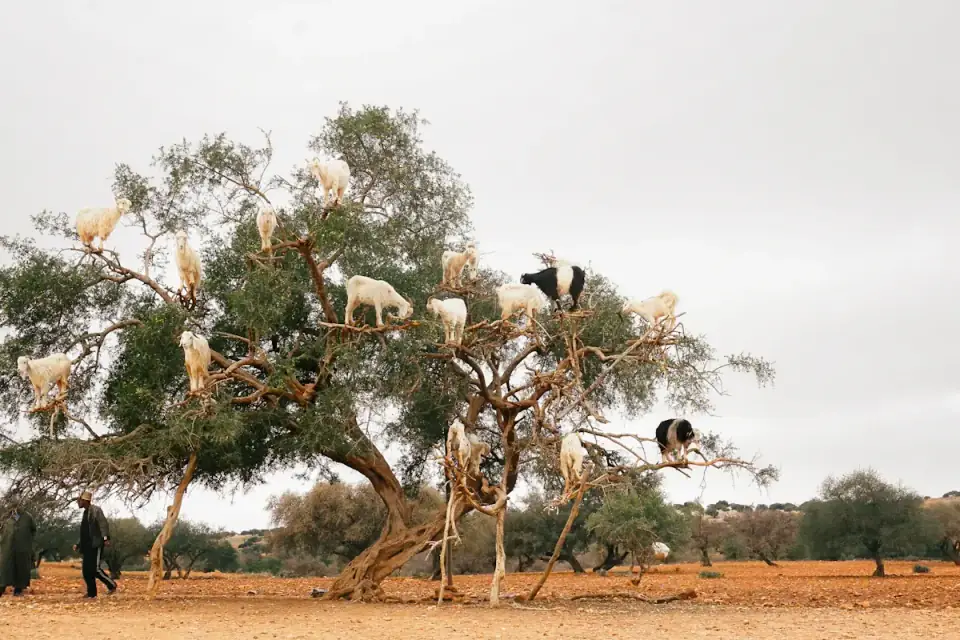
- Argan tree climbing goats: Between Agadir and Essaouira, you'll find the famous sight of goats perched in the branches of argan trees, feeding on the fruit. The argan tree goats tour takes you to the best spots for this quintessentially Moroccan photo opportunity, plus a visit to an argan oil cooperative.
For even more ideas, browse our complete list in Top 15 Things to Do in Agadir in 2026.
How to Plan Your Hidden Gems Day
You can't see all three destinations in one day — they're in different directions from Agadir. Here's how to plan:
- Day 1: Imouzzer + Paradise Valley (same general direction, northeast of Agadir)
- Day 2: Legzira + Tiznit (south, along the coast road)
- Day 3: Taroudant + Tiout (east, into the Souss Valley)
If you only have time for one, choose based on your interests: nature lovers pick Imouzzer, photography enthusiasts pick Legzira, and culture seekers pick Taroudant.
Final Thoughts
The real Morocco doesn't live on the beach promenade or inside a resort compound. It lives in the mountain villages where honey sellers line the road, on wild beaches where the Atlantic has spent millennia sculpting stone into art, and behind ancient walls where craftsmen work leather and silver the same way their great-grandparents did. Imouzzer, Legzira, and Taroudant are not just day trips — they are the experiences that will stay with you long after your tan fades and your holiday photos blur together. Don't leave Agadir without seeing at least one of them.